Thursday, July 5, 2007

Game Design: Triangulation and Scaling in Game Systems

Let us start with this premise: designing a game is essentially designing a system of distribution. Any game, no matter how complex or how simple, is essentially a distribution system. Whether it is distributing points, means to obtaining points (i.e. resources), or positioning of various strengths, each game is, at its core, a system and the basic nature of any system will highly impact the extent to which that system can accomodate a larger vs. a smaller number of players (i.e. how well it can scale).

One thing many a gamer will notice as they explore a variety of games is that some games have a broad range of scaling and some games do not. Usually, I find that if a game can play two players it tends to max out at 4 and, if a game requires a minimum of three players, it can scale to five. Granted there are plenty of games that scale larger. One of my personal favorites - Caylus - scales from 2 to 5 players. Puerto Rico, though the 2 player varient isn't included in the rules at present when you buy the game, can scale from 2 to 5 players. Ticket to Ride and Carcassonne both scale from 2 to 5 players. Fearsome Floors can scale from 2 to 7. Citadels can scale from 2 to 7. That's some serious scaling. But, for the most part, games fall in either the 2 to 4 players category or the 3 to 5 players category of scaling.

What dynamics come into play (pardon the pun) in a game's system such that allowing the possibility of a two player game tends to restrict the game's upper range of player scalability and vice versa? This article is an attempt at finding at least a few answers.

Natural Limits

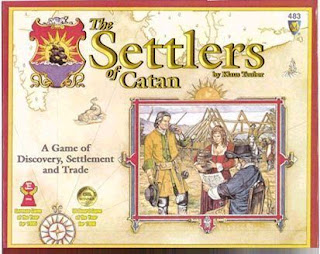
First of all, let's look at the classic game "The Settlers of Catan".


As anyone who is familiar with the game has noted, the game only plays 2 to 4 players as is. To allow a fifth and sixth player into the game, you have to change the basic nature of the board (it has to be larger). Add to this the need for two additional sets of settlement, city, and road pieces and you've got yourself a viable, purchasable product that can be sold seperately from the base game:


Looking at things from a publisher's standpoint, it makes sense to do things this way. Getting people to try Settlers requires a certain non-prohibitive price point. Attempting to include all of the components that allow the game to scale from 2 to 6 players in the base game as a standard product would create a more prohibitive price point such that many people out there who bought the base game might not have done so if it was an additional $20. However, by including the expansion seperately, Mayfair creates a product that is affordable to someone who isn't necessarily sure if the game is for them.

In terms of scaling, there is a natural limit to how the base game can play out with 2, 3, or 4 players. Moving beyond that natural limit requires changes to the board for the game to remain playable. The board simply becomes too small for a 5th or a 6th player unless the board is expanded. Also, extra rules involving when players can build have to be implemented for the system to not break down under the weight of a 5th or 6th player.

This example of Settlers illustrates an important point: most game systems have natural limits with respect to their player capacities and most systems need to be altered in some way for them to expand upwards or downwards from their natural limits with respect to the number of players they can accomodate. It's possible that many games put out on the market that are 2 to 4 player games could be made into 2 to 6 player games but the alterations to the game's basic system are such that offering a base game with that level of scalability is simply not financially a smart move. The publishers would have to put a higher price on the game because of the extra components needed to allow the game to scale.


Crowding

In terms of a game's upper range with respect to scaling, some game systems simply become too "crowded" if you add too many players - thus the player range remains restricted. Let's take Saint Petersburg for example:


In this game, there are four distinct phases: workers, buildings, aristocrats, and upgrades. There are also 8 slots for cards on the board. With Saint Petersburg's game system as it stands, it comfortably plays anywhere from 2 to 4 players. However, if you were to try to include a 5th player, the problem of starting first in a phase each round comes into play. With only 4 phases and 5 players, one player does not get to start first in a phase which could be considered unfair. Also, with a 5th player, the board would have to be made larger to allow more slots for cards. Further, the number of cards in each deck would have to change as the depletion of any one deck is a trigger for the end of the game. Thus, the game system as it stands has a natural limit of 4 players and, to go beyond that, would require some significant changes to the game's basic system.

Triangulation and Non-Triangulation Mechanics

Now let's look at the other side of scaling. Some game systems have a natural limit on the lower end - meaning the game breaks down unless there is at least a minimum number of players. If a game has to have at least 3 players for it to be realistically playable, then it's probably due to a "triangulation" mechanic forming a key part of the game's basic system. Graphically, here is the difference between a triangulation relationship and a duelistic one:

Duelistic:


Triangulated:


What becomes immediately apparent is that adding one additional player greatly increases the interactive complexity of the system. Such interactive complexity is necessary for certain game systems to function. Let's look at two specific examples of this:


Auctions
Many Eurogames implement some kind of auction. Most games that incorporate an auction as a fundamental part of that game's system will have, as a requirement, at least 3 players. There are exceptions (Power Grid is the first to come to mind) but, for the most part, auctions are only realistically interesting if there are three people involved.

Large Payout due to Attrition
Certain games offer a large payout if a player does not succomb to attrition. Examples of this include such games as Diamant/Incan Gold and Cloud 9. You will also notice with these games that a minimum of 3 players is the case. Again, the reasons for this are obvious. If there are only two players, the opportunities for big payoffs are too easy to come by and the competitive tension of the game is tremendously crippled.


"Locked" Systems
Some game systems require a specific number of sets of resources in play in order for the game to work. I'm specifically thinking of Blokus in this respect. To anyone who's played the game, it makes sense that four sets of pieces must be in play for the game to have the tension that it does. Otherwise, if there were fewer players, then either each player would have to have extra pieces that they wouldn't use in a game where there are a larger number of players, or the board would have to be reduced in size (which explains why the game Travel Blokus was published). So, those four sets of pieces remain in play but the rules about who controls which set at which time allow the game to scale from 2 to 4 players.

Most common examples of "locked" systems in games are of the two player variety: Chess, Yinsh, Go, Lost Cities, etc.

Large Group Games or "Party" Games
Some game systems depend on a much larger number of minimum players to work. Werewolves, for example, really needs at least 8 players to have the proper amount of tension it needs. Most party games in general usually need a larger number of players to really work. Otherwise, with only two or three players in a typical party game, the socially interactive element is not robust enough to carry the time and, thus, more pressure is put on the game's intellectual intrigue to provide fulfillment. This can be a problem as most party games are built around the concept of achieving fun via amusement rather than through intellectual intrigue.

Further, many party games that are built on a duelistic system incorporate the idea of competing teams - which implies a minimum of at least 4 players to make the game viable. Other games rely on a triangulation system to work. Apples to Apples is a prime example of this (imagine playing it with only two players).

Impact on Game Design
Regardless of what kind of game system a designer has in place, it's important for the designer to recognize which aspects of his or her prototype need to adjust in the scaling process and which aspects need to remain the same. It's easier to identify those aspects if the designer is aware of the inner dynamics at play within a game system so as to preserve the tension of the game as each new player is added to the equation.

Sunday, July 1, 2007

Jay Tummelson and "A Gathering of Strangers" - the Utah Game Convention


Our annual gaming convention in Salt Lake City, called "A Gathering of Strangers", was a tremendous success in its second year of existence. The Convention this year was sponsored by:

ICon - the Idaho Gaming Convention


Game Night Games

Out of the Box


and Rio Grande Games

This time around, we were specifically glad to have Mr. Jay Tummelson - owner of Rio Grande Games - visit us and spend some time demoing some of the new releases coming out from Rio Grande. The night before the event, Mr. Tummelson came to Game Night Games and spent some time with our local gamers. He demo-ed several upcoming new releases and brought some prototypes of potential games that might be coming soon. Here is Jay (far left side) with some of our regulars at Game Night playtesting one of his prototypes:


The Convention started the next morning and lasted until 10:00 that night. Here is Ryan McLelland, the main organizer of the event, at the check in table:


The convention was held at the Student Union Building on the campus of the University of Utah.


Greg, the manager of Game Night Games, helped at the games check-out booth early on. Here he is (far right) teaching Zooloretto:


One of the more popular games played at the convention was the new Ca$h 'n Gun$ game:


A wide variety of games saw the table during the day including: Axis and Allies, Arkham Horror, If Wishes Were Fishes, Star Wars: The Queen's Gambit, Notre Dame, Cosmic Encounter, The Princes of Florence, Puerto Rico, Zooloretto, Shadows Over Camelot, Wings of War, Can't Stop, Crokinole, Fairy Tale, and Through the Ages among others. For a complete listing, check out this list at BGG:

http://www.boardgamegeek.com/geeklist/22691/page/1

Also seeing the table were several prototypes from members of a local club of game designers called The Board Game Designers Guild which also helped sponsor the event and of which I am a member. Greg, pictured previously, is the primary organizer and founder of the club. Here is Steve (far right hand side), also a member of the club, playing one of his prototypes with some friends:


Here is myself (far left) also playing one of my prototypes with some friends:


Jay Tummelson, in addition to providing demos of upcoming games, was also willing to spend time with members of our game design club in providing feedback on many of our prototypes - which was greatly appreciated. Here is Jay with another member of our guild, Alf Seegart, discussing one of Alf's prototypes:


During the convention, Game Night Games had a table set up with games for sale. As usual, our selection was quite diverse including everything from simpler titles such as "Zooloretto" and "Bohnanza", to dexterity games such as "Pitch Car" and "Tumblin' Dice", to larger scale games such as "Roads and Boats" and "Antiquity". Behind the table is Tim - owner of Game Night Games:


During the convention there were several events of note. One of which was our charity drive to donate games that will be sent to the troops overseas. Phil Kilcrease, another member of the Board Game Designers Guild, was the organizer of the charity event.

We also had a raffle give-away for various games including titles such as "Incan Gold", "Taj Mahal", and "Canal Mania".

All in all the convention was a great success, not only because of all the wonderful people who came, but also specifically due to the presence of Jay Tummelson. He spent much of his time demo-ing games, answering questions, and just making sure that people were having a good time. Here is a picture of Jay and myself:

If anyone is interested in visiting our convention next year, feel free to check out the convention website for updates:

http://www.utahgamecon.org/

Friday, June 29, 2007

Review: China


Overview of Rules and Game Play
China is a quasi-territorial control game involving component placement through card usage. With regards to scoring, there are in-game and end-game scoring mechanisms. Here's how it plays:
The board is a map of China divided into 9 regions. Each of these regions if of one of five colors. So, two regions are yellow, two are green, two are red, two are orange, and the largest territory is purple. Any two regions of the same color do not border each other on the map. There is also a "great wall" of China scoring track which is fun as it reinforces the theme quite well. The board is also double sided with a different setup on each side.
Each player starts off with three cards in their hand. Each card is of a single color corresponding to one of the five region colors and each card has listed on it the names of the territory or territories it can be used for. When a player plays a card, it allows that player to place either a "house" or an "emissary" in a region. A player may place up to two pieces on their turn (their cards permitting) but they may only do so in a single region. The rule books provides an easy way to remember this with the 3-2-1 idea:
Three cards may be used to place up to two pieces in one region.
When placing pieces, if you have two cards of the same color, they may both be played as a "wild" - allowing you to place a piece in any region you wish. Thus, a player may use all three cards in their hand on their turn.
At the beginning of the game, after everyone has their cards, the top four cards from the draw deck are layed out. After placing their pieces each player replenishes their hand back up to three at the end of their turn by selecting cards from either the four that are layed out, blindly off the top of the draw pile, or both. After replenishing their hand, any empty spots left by cards taken from the four that were layed out are filled again off the top of the draw pile. The card replenishment is important because going through the draw deck twice triggers the end of the game.
In placing pieces on the board, one of the interesting rules is that no player may place two pieces in a region that doesn't have any pieces in it already. What this creates is a situation where some of the players are hesitent to place a piece in a new region because all of the other players would then have a chance to place multiple pieces in that same region on their turns.
Houses
There are a specific number of spots in each region for a house and there are roads connecting these spots. You may place a house on any spot in a region that you wish (if you have played the appopriate card or cards to allow you to do so). Once any region fills up, the scoring works in descending order like so:
The first place player (the player with the majority of houses) gets a number of victory points equal to the total number of houses in the region regardless of who placed them. The second place player gets a number of victory points equal to the total number of houses in that region placed by the first place player. The third place player gets a number of vp's equal to the number of houses placed by the second place player and so forth. Ex:
Player one plays 4 houses in the purple region
Player two plays 3 houses in the purple region
Player three plays 1 house in the purple region
Player one would get 4+3+1=8
Player two would get 4 points
Player three would get 3 points
What this creates is the interesting dynamic of trying to get others to help you out. 8 and 4 is a fair amount of distance between a first and second place player with only one extra house placed by the first place player. However, if a smaller provice broke down like this:
Player one plays 4 houses in the red region
Player two plays 1 house in the red region
Player one gets 4+1=5 points
Player two gets 4 points
In this example, player one did all the work and player two, with only one piece, got only 1 point less than player one.
Roads
As I mentioned, there are roads that connect the housing spots. If a player connects four of their houses in a row or more along a road (regardless of whether those houses are all in the same region or not) that player gets a number of victory points at the end of the game equal to the total number of consecutive houses on the road.
Emissaries
Emissaries can be placed on a region in a black circular symbol in the middle of each region. The total number of emissaries that can be played in a region (regardless of who plays them) is always less than or equal to the total number of houses in the majority in that region. For example, if a region has two houses from player one in it and one house from player two, then that region can only hold two emissaries in it because two is the number of houses in the majority in that region at that time. Emissaries can by played by anyone. They do not have to be played by the majority player.
Between each region is a small black spot with a number on it. There is a black game piece that represents the emperor and, at the end of the game, the emperor piece starts out on the spot labeled "1" and continues through until he gets to spot "15" - at each spot "checking the relationship" between each region. In a given relationship, there is only scoring if one person has a majority of emissaries in both regions of the relationship and that player gets a total number of points equal to the total number of emissaries in those two regions regardless of who played them. So, if you choose to place an emissary in a region, you had better win the majority in that region or you're just handing more points to the eventual majority winner in the end game scoring.
Fortifications
A player may, on their turn, choose to play a fortification (represented by a small black square) in a housing spot for their first piece (remembering that they have to play a card or cards to do so) and then a house on top of that fortification as their second piece. Each player may only do this once in the game. The fortification piece doubles any scoring in which the house on which it is built is involved - meaning, region scoring with houses and any road scoring.
Thoughts
So, now that we've covered the rules, what about the game? Is it fun? How deep is it? Who would like it? etc. Well, I personally like the game. In spite of the lengthy dissertation I just made on the rules, it's not really a very deep game. In fact, even though I may play China occassionally with my gamer friends, I believe the game really shines as an "introduction" or "cross-over" game (what I mean by "cross-over" game is a game that has enough options to keep a genuine gamer interested but has enough of the right elements to appeal to a non-gamer.) Here's why:
-The board and the game components are colorful and visually appealing.I know this may not sound like a big deal but non-gamers tend to need something more in a game's appearance to have a good time as they are probably not as interested in mechanics.
-The turns are short and the game moves quickly. New players don't have to wait for a long time for it to be their turn to play again. Also, because the placement of pieces by the other players can affect multiple scoring opportunities, other players' turns are more interesting to watch.
-Even though there are multiple scoring options, what you do on your turn is pretty simple - play cards and place one of two types of pieces in a single region. This element helps reduce "turn fear" on the part of newbies/non-gamers (you know, the idea of a person hating it when its their turn because they have no idea what to do).
Conclusion
If you are looking for a game to add to your collection that would appeal to your non-gamer friends yet is still fun to play on its own merits, then China just might work for you. I personally enjoy playing it.

Wednesday, June 27, 2007

Review: Colosseum vs. The Princes of Florence

Vs.


Overview
I'm writing this review of "Colosseum" as a comparison between it and "The Princes of Florence" (hereafter abbreviated "Princes") primarily because the game play in Colosseum almost demands the comparison. Usually people use the term "stark" in conjunction with a reference to differences as in the phrase "stark contrast". With Colosseum, I would say that there are "stark similarities" between it and "Princes". However, I find in comparing the two games, that "Princes" is a hands down winner on pretty much every level except for the beauty of the artwork (and even then I have some issues with how Colosseum is laid out). Perhaps the easiest way to summarize the comparison is to say that Colosseum is like "Princes" but with baggage. So, let's look at why this is.

Similar Mechanics
Both games last for a set number of rounds (Colosseum: 5, "Princes": 7)

Both games have competitive auctioning as well as purchasing possibilities from a limited market.

Both games have a number of point scoring goals you work towards that are each unique in the things required to score the maximum points possible (Colosseum has attractions/programs - each requiring a unique tile set of different performers to achieve maximum points while "Princes" has Works with a unique requirement set for landscapes and buildings) - this is the strongest similarity between the two games.

You can play an attraction in Colosseum or a work in "Princes" without having all of the required items but you score less points for it.

If you have the best attraction / work of everyone in a round, you get three points for it (in Colosseum, those points count towards latter attractions and represent a recurring form of point scoring. With Princes, the three points are added immediately and are not recurring.)

You can acquire items that can, for one time only, increase the total value of your attraction or your work (for Colosseum it's Medals while, for Princes, it's Bonus Cards).

You have to make choices as to which actions are the most important to you as you only have a small number of opportunities to purchase things.

Because of these similarities, it comes as no surprise that the same designer, namely Wolfgang Kramer, was a co-designer for both games. Granted there are differences. Specifically, there is the Emperor as well as various Senators in Colosseum that may or may not attend your attractions depending on luck (you roll dice). With "Princes", the luck in the game is mitigated by drawing 5 cards and then picking the one out that you want.


The Auctioning System
The auctioning system is more complicated and less satisfying in Colosseum than it is in "Princes" for several reasons. First, you are not bidding on a single item or tile. Instead, you are bidding on sets of tiles (three tiles per set). This might seem like an improvement over "Princes" as much of the tension in the game "RA" comes from having to decide how worth it it is to you to bid on something with a mixed set of variables. However, the fact that tiles can replenish after a bid is taken makes the auctioning less interesting and more random. Further, the tiles only replenish and other players cannot bid again after they have won a bid until the initial bidding player finally takes a bid. Also, the auctioning can continue in Colosseum such that a person could win two or more auctions in a given round.

The auctioning system in "Princes" is less complicated and more tense because people are fighting over more similar things and, once they have won a bid, they are out of the bidding. This means that the decision to raise a bid and potentially take it carries a lot more weight in "Princes". In Colosseum, it's too easy (even with 5 players) for everyone to be going after different things (which dramatically reduces the tension involved in the auction).

Attractions vs. Works
With Colosseum, you can only play one attraction per turn. You may, however, play that same attraction over and over again over several turns if you choose to - which lessens the tension of playing it. With Princes, your actions are limited as well but you can play multiple works in a given turn. However, once you've played your work, you can't play it again unless someone recruits it from you and you then recruit it back. Thus, you have to decide if you want to play your work early and take less points for it or play it later and get more points for it - a decision with decidely more tension involved than what Colosseum offers.

Player Interactivity
The one main criticism of "Princes" is that the player interactivity is low. Colosseum does have more player interactivity. You can make trades and exchanges with other players involving tiles and money. There is also some indirect interactivity in that how the players move the senators and the emperor on their turn can impact the other players' abilities to score more points on their respective turns. However, the movement of the senators is not that interesting of a decision making process.

The main source of interaction in Princes is the auction and the limited market (not having enough of everything for every player to acquire one). So, what other players do on their turns with respect to purchasing items in "Princes" is more interesting than what other players are doing on their turns in Colosseum. Because everyone's tiles are out in the open in Colosseum, you can reasonably deduce what attractions they are most likely gunning for. With "Princes", by having less variables, there is actually more intrigue because you honestly can't always figure out exactly what the other players will be buying next. There are simply more possibilities that might be reasonable for them as the smaller number of variables at play have a wider range of possible solutions. Also, the works that other players have in their hands is secret and each player's money supply can be kept secret - both of which are aspects that add more intrigue to the game when compared to the open resources of Colosseum.

Components
Ok, the artwork on Colosseum is typical Days of Wonder: very colorful and attractive. However, the functionality could have been slightly improved. The auctioning mechanism of how turn order flows and who can bid and who can't is quite clunky in my opinion. Some additional components could have easily helped make this mechanic a lot smoother by helping the players to keep track of things. Also, there are various tiles that award bonuses if you have the most of them but not all of the tiles are eligible for this bonus. Just like how RA incorporates the use of a symbol to remind the players of which tiles stay and which tiles are discarded at the end of a round, it's my position that Days of Wonder could have included symbols on the tiles to indicate which ones are eligible for a majority bonus and which ones aren't. This small addition won't make much of a difference to experienced players but it would help out a lot in trying to teach new people how to play the game.

Conclusion
The bottom line here is that, in my opinion, if you are looking for the kinds of decisions and intrigue offered by Colosseum, then "The Princes of Florence" offers many of the same kinds of decisions but does so to a greater, more fulfilling degree and in a more streamlined, less complicated fashion. Colosseum has more pieces involved in it's structure, but "The Princes of Florence" has stronger depth. Perhaps the easiest way to say it is that, sometimes in life, "less is more".

Monday, June 25, 2007

General Gaming: Why Some People Play Board Games (and Why Some Don't)

There are a number of valid forms of entertainment and recreation out there. However, with respect to board games, the question about why some people play them and why some people don't comes down to a fairly straightforward distinction:

-Some people like to think for recreation
-Some people want to do anything but think for recreation

Board games (well, the good ones at least) are a way of engaging one's imagination in a creative way - but you have to meet the hobby half way. Most board games require some level of mental engagement and it is precisely that requirement that turns some people on and some people off. Sure, there are varying weights of board games - some very light and some very heavy - but usually they require some mental energy.

Also, there is the realism factor that must be considered: meaning that some people are unwilling to use their imagination or at least don't really derive satisfaction from doing so to the extent that a board game really requires. Here's what I mean:

Let's say a person reads a book like, oh, Harry Potter. Now, the enjoyment of that book depends on the reader's ability to pretend that, for a while, there are some characters named Harry, Ron, etc. and that these characters are wizards - which means that you have to pretend that wizards exist as well - and so on and so forth for the story to be any good to you.

Some people are so unable or unwilling to use their imagination that they get stuck right up front: "Well, since there are no such things as wizards, this is just a 'stupid' story." The same person would read a book like Lord of the Rings and, rather than focusing on the emotions of the characters or on the conflicts of the plot, they stay hung up at the beginning on basic premises such as "elves do not exist so, therefore, this is a 'stupid' story." It may sound ridiculous but it's the truth. A person's ability to imagine and envision things that are not immediately within their personal realm of experience is directly proportional to their ability to appreciate and enjoy genres of literature such as science fiction, fantasy, and the like.

You could tell a story of two lovers who are not able to be together and yet want to be (a very typical romance story) and do so twice in exactly the same manner but with one difference between the two tellings: in one story the lovers are elves and in the other they are ordinary people. The person who gets stuck on things like "elves do not exist" will hear both stories and would most likely say that the one with the elves in it is ridiculous and the other is not even though the plot would be exactly the same. Why the difference? Because there are no elves in the second story. This is what I'm getting at. Some people can't use their imagination in a way that they find satisfying outside of anything other than within the scope of their immediate, personal experience.

So it is with board games - some people enjoy using their imagination to envision themselves and the other players as master builders competing for the honor of best builder in the land and some people will just see pieces on a board much like a person would look at an assortment of knick knacks on the top of their dresser - lacking in any sort of significance.

Granted, a person can go overboard with their imagination such that they aren't keeping their feet on the ground. However, good lighthearted fun via recreational thinking is one of the main sources of appeal for the hobby board game player.

Review: Die Macher

What follows is a review I posted on BoardGameGeek some time ago. Enjoy.


Die Macher - BoardGameGeek game I.D. #1. I'll admit that I had eagerly been anticipating the reprinting of this game simply to see if this longstanding member of the top ten and pioneering entry on BGG was really as good as its ratings indicate. I have played the game a number of times since acquiring a copy of the new Valley Games reprint. Here are my conclusions.

Overall Impression
Various adjectives that communicate a lot of information very quickly can be ascribed to games . I've heard the term "elegant" applied to games with as few rules as possible yet books and books can be written about their strategy. The game "Go" would fall into this classification. One might say that "clunky" could be applied to a game that has lots and lots and lots of rules such that the game really resists being played in a variety of ways and can only be approached in a few reasonable ways. The term "chaotic" might be applied to a game with lots of dice rolling, blind draws, random cards, and unexpected turns of events created out of some unknown element(s) in the game.

Though Die Macher is not an "elegant" game in the sense of the word I previously described, it is not "clunky" in spite of the many rules in the game and, even though there are lots of random elements in the game, I wouldn't necessarily classify it as truly "chaotic". Perhaps the best term to describe the game is "majestic" in that the game's rules all serve to reinforce the theme and the chaos of the game makes sense within the political theme presented. Each round is composed of a series of mini-games that all come together to create a truly majestic whole. Bottom line, this game lives up to its mystique.

The "Time" Factor
About 4 hours at least is required on a first time run through with new players. When you play the game for the first time, don't be fooled by the length of the first round. The time goes by extremely quickly after getting through that first round as the rules become reinforced by their repitition in each subsequent round. The first round took about 1 1/2 hours to get through. Round 2 took about 45 minutes. Round 3 took about 30 minutes, etc. etc. Not only does the time intensity decrease but the absorbtion of the rules allows for the intrigue of the decisions offered by the rules to increase. In spite of the initial awkwardness that comes from a first time play of the game, everyone I've introduced Die Macher to has responded positively to it and has stated that they would like to play it again - the time intensity notwithstanding. In fact, as one begins to grasp the rules and begins to see the mixing of the game's "gears" the time moves quickly such that, after you are finished, you might ask yourself "was it really four hours I just spent?"

I would however strongly suggest that, if you want to make Die Macher run smoothly, you will have to invest some prep time in making player aides or downloading some off of BoardGameGeek simply to help the players keep track of where they are in the round and to help people have a vision of all of the elements going on in the game. Simply copying the summaries provided by the rule book is, in my opinion, insufficient.

Components
The components are "okay" at best. I had some problems with the boards bowing up on me on my second run through of the game and the cards also tend to suffer from a bowing problem (i.e. the material the cards are made of is pretty stiff and tends to stay bent after shuffling). However, the tiles and cubes are okay. I had to make some clarifications out of the rule book on the second time through the game with further new players as some of the graphic designs in this edition are really lacking. The theme of the game is that each player represents a political party and, in keeping with that theme, each party has a certain number of "issues" that they take a stand on (determined by cards that you are dealt initially and that you acquire during the course of the game). In designing graphics for these various "issue" cards there are two issues ("Nuclear Power Development" and "Economic Redevelopment") that are both symbolized with a picture of a building and a crane. The crane, in fact, is the same picture. It's just been copyed and pasted and the buildings themselves look very similar. The game its self takes up a lot of table space and, with that in mind, looking at an issue card from across a larger table magnifies the problem of two issues having extremely similar graphics. After the first playing of the game, which was with a pretty "game savy" group of people I might add, I had to take a permanent marker and make distinctions on all of the cards of one of the issues (I chose "Nuclear Power Development") simply because the players were consistently confusing the two issues for each other.

Game Play
Without going into a tremendous amount of detail about the rules, here is a list of the elements that go into the game:
-You take stances on certain political issues.
-You can change your stances on political issues but only one at a time per round.
-There are seven rounds (six of which involvs a series of decisions and the seventh is purely a scoring round). Each round represents an election that is held within a particular state in Germany.
-Elections are won by the player with the most number of "votes". Votes are acquired by paying to hold party meetings within the state, having a platform that matches up with the public dispositions within that state, and by how popular your party is in that state (the people in the state may disagree with you on issues but they may like you and vice versa).
-Elections also offer a certain number of "seats" based on your total number of votes. In other words, it's not a "winner take all" type of election. Even if you don't win, you still can get a certain number of seats in a state. However, winning the election allows you to obtain certain benefits in the form of end game victory points and leverage in affecting the opinions of the nation as a whole.
-There are opinion polls that are auctioned that can impact your popularity in a state or your party membership overall.
-Players can purchase a media presence or multiple media presences in a state to help them stay immune from bad opinion polls and to help that player persuade the people in that state to change their viewpoints about certain issues.
-Players may accept monetary contributions to their party from outside sources and run the risk of losing party members in the process or they may reject contributions and gain party members as a result.
-You have a personal group of henchmen who are referred to as the "Shadow Cabinet". There are essentially your own personal secret service and they can be dispatched to a state to get things going in your favor (for a price of course).
-There are auctions for opinion polls, blind bids for the right to choose who the starting player is in a round, territory control issues with media markers (there can only be so many markers in a state), competition over majority of votes in a state, competition over affecting the national opinion through winning elections, opportunities for your henchmen in certain states to make deals and create coalitions between parties in a state, in essence - there is a lot to the game.

Victory points are a culmination of the seats you win in the elections, bonus points in the form of national media presences you may receive for winning elections outright in some of the states, your total party membership, and how much your party platform squares up with the viewpoint of the nation overall at the end of the game.

Conclusion
This game is a heavy game that takes up lots of table space and takes a long time to play but the investment is worth the reward and the time you spend won't feel as long as it really was once you're done. I strongly advise making player aides to help the game move more smoothly (I created several necessary score sheets that were larger and easier to understand than the disposable sheets that come with the game and laminated them so the players could use dry erase markers instead of pencils). I recommend that you have a calculator on hand for the final point tabulation to speed it up.

The theme of the game works really well and has appeal in that many of the elements in the theme can be applied to a variety of political systems - not just the German one. In other words, you don't have to have lived in or be from Germany to appreciate the theme.

Bottom line, this is a game that will tend to have great appeal for gamers but will more than likely not appeal to casual gamers and will probably not work at all for non-gamer (i.e. primarily party gamer) types of people. I personally have enjoyed playing the game and I look forward to playing it again.

Game Design: Categorical Aspects of Games

What follows is a listing of various categories of different mechanical and organizational aspects of games. Rather than being an article, it's more of just an informational listing.

Information Type/Level of Luck:

-Perfect Information
-Limited (Some public, some private, some hidden from everyone)
-Private (Know your resources but no one else’s)
-None (No one knows what is coming next – “Sorry”, “War”, etc.)

Participation:

-Non-elimination
-Partial elimination (possible but not required– “Shadows Over Camelot”)
-Elimination (one person left – “Risk”)

Opponents:

-Everyone for themselves
-Teams/Partners
-Changing Teams
Random (“Kings”)
Chosen (“Teams of Enemies”)
-Co-operative (against the game)
-Variable co-op (possible that someone is helping the game)

Scoring:

-Most points
-Most amount of pieces played
-Most amount of pieces acquired
-Balance (least = your score – “Tigris and Euphrates”)
-Larger amounts of small scoring moves
-Smaller amounts of large scoring moves
-Exponential scoring (“St. Pete’s”)
-Mixture of in-game and end-game scoring
-Most consecutive pieces (“Ticket to Ride”, “Settlers”)
-Bonuses for certain accomplishments in the game (“Princes”, “Puerto Rico”)
-Bonuses for certain accomplishments in a given round (“Princes”)
-Limits (“Ingenious” – no more scoring for a color after 18 points)
-Thresholds (“Lost Cities” - must score over 20 to score positively)
-Prisoner’s Dilemma (blind, dual choice conditional scoring)

Mechanics:

Card Playing:
-Sets, Runs, Suits,
-Trumps
-One time action modifiers (Offense and Defense)
-Long term action modifiers (Offense and Defense)
-Short term action modifiers
-Trick taking
-Cards act as resources (“San Juan”)
-Cards act as monetary measurements (“San Juan”)

Piece Placing
-Moving (“DVONN”)
-Non-moving (“Blokus”)
-2D
-3D
-Adjacent
-Non-adjacent connected
-Non-adjacent, non-connected

Game Boards
-Collective board (“Risk”, “Blokus”)
-Individual game boards (“Princes”, “Puerto Rico”)
-Combination of individual and collective game boards

Dice-Rolling
-Various amounts of dice (“Risk”)
-Multiple options for using dice results (“That’s Life”, "Can't Stop")
-Bonuses for certain combos (ex. doubles)
-Actions occuring via dice ("War of the Ring")

Direct Attacking
-Known outcome (“Chess”)
-Unknown outcome but fixed (“Stratego”)
-Unknown outcome but random (dice rolling - “Risk”)
-Capturing through replacement (“Chess”)
-Capturing through surrounding (“Go”)
-Capturing through jumping ("Checkers" "Zertz")
-Attacking via proximity (“Wings of War”)

Auctioning
-Closed system ("RA")
-Blind Bid ("Die Macher")
-Sequential
-Non-sequential

Resource Acquisition
-Single payoff (“Princes of Florence”)
-Continuous payoff (“St. Pete’s”)
-Resource upgrading (“St. Pete’s”)
-Trading ("Settlers of Catan")

Role-Playing
-Various attributes, strengths,
and powers for different characters

Role-Taking and/or Variable Phase Order
(“Puerto Rico”, “San Juan”, “Citadels”)

Territory Control
-Only player ("Risk")
-Majority player

Tile Placement
(“Carcassone”, "Tigris and Euphrates")

Collective Influence (on a single area or item)
(“Pirhana Pedro”)

Indirect Influence on another player
(“Robo Rally”)

Plan Setting / Prediction
(“Wings of War”, "Star Wars: The Queen's Gambit")

Continuums
-Thresholds that trigger events
(“Industrial Waste”)

Deduction
(“Sleuth”, “Clue”, “Mystery of the Abbey”)

Negative/Positive Turn Requirement
(help opposition, then yourself - “Shadows Over Camelot”)

Additional actions for crossing a threshold
(“Ingenious”)

Simultaneous Choice
(“Diamant”, "Cash n' Guns")

Motor Skill / Dexterity
(“Polarity”)

Supply and Demand
(“Power Grid”)

There are numerous mechanics that can be used in games. I find that trying to list them and see what they are can help build a vocabulary of useful solutions to gaming problems in the design phase. However, it's also useful to know what's out there so you can have some perspective on your own designs (i.e. are they truly unique or not).