Tuesday, January 3, 2017
The Kansas City Game Designers
Monday, June 2, 2014
Business Analysis and Game Design
It's a very fun job and I'm struck over and over again by how my background in game design has helped me acclimate to the position. Here are some reasons why.
Playtesting and feedback help a person let go of the prideful notion that they are going to get things 100% right without having to go through iterations.
Business Analysis is a very iterative activity wherein something that seems to make sense after a meeting with one set of SME's doesn't actually hold muster when looked at by a different set of SME's who find holes that the first set didn't know about or consider. This can be a very difficult prospect for someone who takes a lot of pride in their writing (such as myself) wherein one works really hard on a document only to find out in short order that most of what was written needs to be changed. This requires a certain amount of patience that I've had to learn via putting prototypes out for playtesters to critique. This leads right into my next point.
Accepting that prototypes are essential in getting proper feedback helps one realize the importance of creating documentation that people can react to.
This is an interesting lesson as I've learned how important it is to actually write up drafts to get the feedback I need. It's not enough to just explain something to someone. Once an idea is in the form of a document, people can react to it much better and see things about it much more clearly - not only what's right, but also what's wrong. This hearkens back to the notion in game design of how some designers are reluctant to build a prototype. They are content instead to hang on to their idea, just tell people about it, and then believe that the feedback they are given off of their idea description is worth much more than it actually is. Don't get me wrong. It's not worthless, but it's so many levels removed from the truly effective feedback that comes from people who are actually trying to experience a game rather than just listen to a description of such.
In many ways, it's the same thing with Business Analysis. One has to go in and create the process flows, write the user stories, create the context diagrams, and do many of the other things required to document the intent, vision and specific requirements for a software project before one can truly get feedback from others about what's right and what needs to change. Accepting early on that one is writing a particular draft of a document as a means of getting additional feedback is so much more effective than approaching each draft like it's going to be the last one. One attitude is very receptive and welcoming of feedback while the other sees feedback as a threat to one's ego.
Explain things clearly - but succinctly.
In documenting software requirements, one has to explain things clearly to an audience who has not done all of the research and gotten into the guts of the project like a business analyst might. In the same way, a game designer has to write a rule book explaining his game to someone who hasn't been involved in the many iterations of the game's creation. The person reading the rule book only knows about the game what the rule book explicitly lays out.
In writing requirements, it's funny how many times I'm reminded that I need to spell something out. I'm also reminded of how much one has to leave fluff out of it so the reader's patience isn't exhausted.
This is one area where I made a mistake in writing the rule book for Heavens of Olympus. I approached the rule book like I approach teaching a group of people how to play a game. In explaining a rule to a table of gamers, often a brief thematic explanation of what the rule is trying to represent goes a long way in helping the group remember certain specifics. However, in writing a rule book, taking that same approach actually hinders the reader's ability to get to the essence of the game. It comes off as fluff, tries one's patience, and the comments on BoardGameGeek tend to bare this out about how I made this mistake.
Test boundaries and think about extreme scenarios.
Game design forces one to think about all the wonky ways a player might try to approach a game. In so doing, it forces one to consider extreme scenarios that might actually break a game. Software development and requirements gathering can be very similar. Thinking about all of the possible ways a particular software solution can play out helps one see much more quickly where certain danger paths might be.
Conclusion
I feel like there are many corollaries with my new career and what I've learned from my game design and playtesting experiences. I also had a job for a time of being a software usability researcher and I found that tied in very neatly with certain principles of how to make a game more accessible to a player in terms of layout and presentation. When I have more time, perhaps I'll come back and revisit that connection in a future post.
Monday, September 2, 2013
What I've learned about myself in the past two years.
In early 2011, around the time my board game was published and around the last time I posted here, I went back to school to pursue an MBA. I've been working on it ever since and I should be graduating early next year.
During this time of going to school, homework has dominated my free time. Because I'm married and have a couple of kids, this means that the natural give and take between husband and wife with respect to "I'll watch the kids while you go do x and then you watch the kids while I go do y" has very much been a matter of my wife watching the kids a lot while I'm putting in time with the books.
As such, my opportunities to game have been very, very limited. Further, because of when my classes have been happening, I haven't been able to attend the board game designers guild meetings for some time (I believe it's been at least 6 months).
The reason why I'm sharing all of this is because my gaming tastes have changed dramatically during this time. I used to be a typical Eurogamer with strong interest in balanced mechanics and only minimal interest in theme heavy games if they veer away from balance to much. However, with only limited amounts of time to game, I found that playing euro games was fine but I needed more. I found myself needing story. I found myself needing theme.
So, I've been putting in time running an RPG campaign. The irony is that running a campaign is usually a very time consuming bit. But, I have a group that is willing to meet once a month (or once every two months if need be) to accommodate my schedule. Further, when we meet is at an odd time (we usually have to start at about 9pm and game until midnight) primarily due to the fact that we have to game after my kids are in bed.
In running these RPG sessions, I've found a true love for the story-telling nature of games and I really appreciate the lasting impact of a gaming session (reminiscing with someone about some crazy turn of events that almost killed one of the characters, etc.). If having vivid story-driven experience comes at the expense of some balance or elegance, so be it. If rules start to become a bit crunchy so the elements involved in the story telling can come through, then that's fine with me.
In short, I've changed in terms of my gaming tastes. When I look at a new game now, I find myself looking for what kind of stories the game is capable of telling. This shouldn't be taken as some sort of rejection of past preference. I still love Puerto Rico, Princes of Florence, Caylus, etc.. I just find myself looking at different things now that previously weren't as important.
Thursday, March 31, 2011
Heavens of Olympus featured in the Deseret News
http://www.deseretnews.com/article/700123283/Good-heavens-Gamers-dream-comes-true.html
Saturday, March 19, 2011
Heavens of Olympus Images


Tuesday, March 1, 2011
Design History of The Heavens of Olympus
http://www.boardgamegeek.com/blogpost/790/figuring-it-out-designing-the-heavens-of-olympus
Monday, February 21, 2011
Official Video Tutorial for "Trollhalla"
I was asked by the designer - Alf Seegert - to do this video and it has been approved by both him and the publisher. Alf, the artist - Ryan Laukat, and I are all members of the "Board Game Designers Guild of Utah". You can find us at www.bgdg.info. Here is the video:
Due to Youtube's 15 minute cap on video time and because of my desire to keep this tutorial as all one video instead of a several part series, I had to keep the pace of the video high. I hope you enjoy it.
Monday, August 2, 2010
A Review of "Rules of Play: Game Design Fundamentals"
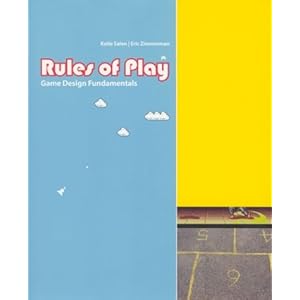
There are a small number of books that consistently get brought up whenever game design is being discussed - partly because there are so few books at present that directly deal with game design as a topic - and "Rules of Play" is one of these books. A friend of mine had a copy and, in skimming through it, I took notice of the guest essay and game design contributions from the likes of Reiner Knizia, Richard Garfield, and James Ernest. The chapter summaries, the variety of topics that were covered, and the overall organization of the book all looked very promising. I then went on Amazon and read lots of reviews. There were a few short negative reviews that really didn't say much while most of the reviews praised the book in various ways. The only consistent caveat I encountered from review to review was that the book was more "theoretical" than what you might expect (i.e. if you're looking for a "how to" manual, look else where). So, my wife got me a copy as a gift and I began eagerly reading.
I will confess that the book was not what I expected, but this was due to some significant problems that I didn't really see adequately addressed in any of the reviews I read on Amazon. I haven't gone back to check if any new reviews have been added since that time so it's possible that that's no longer the case. However, some of the problems I wouldn't have expected to be in a book like this. So, if you are interested in game design, particularly board game design, then I hope my review might be of some use to you in helping you decided if the book is for you or not.
Virtues
This book has enough virtues that I do recommend it. My initial impression of the organization of the book proved to be accurate. Each topic is addressed in a very logical, sequential manner and every chapter has suggested readings at the end with excellent chapter summaries provided. Overall, you can tell that the authors really did their research in putting the book together as their sources come from a variety of places and cover a significant number of topics. Also, the last chapter of the book was particularly strong in that they tied in a lot of their previous material into the last few game examples. So, if you're on the fence, I would suggest getting this book.
Problems
The Subject Matter and the "Subtitle"
To help illustrate my first line of criticism, let's consider a hypothetical scenario. Suppose for a moment that you saw there was a class being offered called "Basketball: Dribbling and Shooting Fundamentals" and that it just so happened that you were interested in improving your basketball skills. Before registering for the class, you decided to read some reviews on it and they told you that the class was more "theoretical" than what you might think. Undeterred, you registered for the class and you showed up on the first day ready to learn. The teacher began to lecture and you found yourself being told about all kinds of things like friction coefficients, air resistance equations, vectors, the chemical composition of the material in a basketball, and the varieties of wood types used on most basketball floors along with the types of varnishes used to provide the protective coating. You also learned about the anatomy of the eye, the human hand, different muscle groups, nerve endings, and how the brain processes information.
Now, is all of that information interesting? Potentially (depending on your disposition). Is it more theoretical in nature? Yes. Is this a problem? Well, this is where one confronts the implications of the title of the class. Claiming that you will be covering "Dribbling and Shooting Fundamentals" creates an expectation that the class will be about, well, "Dribbling and Shooting Fundamentals". Is all of that information I mentioned connected to the dribbling and shooting of a basketball? Absolutely. The laws and principles of physics, chemistry and anatomy are present in every situation where people are dribbling and shooting. So, in one sense, the class description is technically accurate depending on how you define "fundamentals". However, in another sense, our theoretical class was really about physics, chemistry, and anatomy that just so happened to be involved in basketball situations and, in fact, wasn't actually about dribbling and shooting at all. What's more, does a study of those topics help a person in any sort of practical way with respect to their dribbling and shooting? Not really. Why not? Because the information is too theoretically removed from the activity to be of any immediate practical use. Unless the course instructor accompanies all of that theory with some strong examples that help make some tangible connections as to how the concepts being discussed can actually help a person in relation to the acts of dribbling and shooting a basketball, he runs the risk of the class's title actually misleading his potential audience.
How does this relate to "Rules of Play"? Well, the subtitle of the book is "Game Design Fundamentals". A more accurate subtitle would have been "Theoretical, Metaphysical, and Ontological Considerations about Games". Note that my proposed subtitle spells out that the book will discuss "games" - not "game design". This is important because the two subjects are not necessarily synonymous topics and this distinction, though a subtle one, is real. For example, one of the concepts discussed in the book is how meaningful play cannot happen without recognizable input and output (i.e. you're able to tell when the game has given or received information). This concept can be helpful in evaluating why a game may feel arbitrary but, at the same time, knowing this concept does not mean that you know the "design fundamentals" of how to bring about such recognizable in-out streams in a game. As another example, the concept of "emergent play" (meaning that a satisfying game often has a large space of possibilities for how the inputs and outputs can affect it) is discussed and it's a useful concept and term to help evaluate why a game may not have "it" so to speak. However, knowing this concept doesn't automatically mean that you know the "game design fundamentals" of how to actually bring about meaningful play in the context of a game design.
The authors were trying to create in "Rules of Play" a quasi universal text about games in general and that's fine. But, to truly discuss "game design fundamentals", the authors would have had to have been willing to step down one abstraction notch a lot more times than they did during the course of the book to discuss some specifics for different genres of games as each genre will have its own set of fundamentals (i.e. creating effective input-output information streams will have its own set of fundamentals for video game design as compared to board game design). They wouldn't have had to go into every single specific instance of how to apply the principles they discussed in order to establish practical tie-ins for the concepts in the book (i.e. there was no need to create a "how to" manual) but what they did was not enough to me to justify using the subtitle of "Game Design Fundamentals" (even though it is technically an accurate title). Instead, they often settled for making very general statements that honestly didn't say very much or they opted for broad rhetorical questions on the order of "How can this help you with your game design?"
Fragmentation
Do you remember those essays and game design examples from game designers that I talked about? They were, for the most part, pretty good and represented a prime opportunity to make practical connections with the theories being discussed. However, the essays felt very disconnected from the chapters surrounding them. What I mean by this is that the game designers who wrote the essays and game design examples never mentioned or even alluded to how any material being discussed in the surrounding chapters helped them or even influenced them in the process of trying to make or improve their games - and this is in spite of the fact that some of these essays and game designs were specifically made to be included in "Rules of Play". This is probably because there was no such conceptual influence (though that's only speculation on my part). The result is a feeling that these inclusions "just so happened" to be in the same book as the other material. The lone "exception" (if you can call it that) was the game design example of "Sneak" but this was just because parts of the game were printed in the margins of the following chapters (thus using the book as a tool to actually play the game). However, mere proximity does not on its own produce true conceptual integration.
In fact, in spite of how well the book was organized, it felt much more like a series of parts where one jumped from one fragmented literature review section to the next rather than a truely cohesive whole. The authors tried to account for this by framing the organization of the book under different "schemas" but even within chapters that were within the same "schema" a very fragmented feel was present. One exception to this was the very last chapter because of the extent of referencing that took place to previous concepts addressed in the book.
The Use of Game Examples
The Writing
To help you get a feel for the types of writing problems I encountered, suppose for a moment that you were reading a book on "dogs" and the following was a paragraph from that book:
"In this chapter, we will discuss dogs and fleas. Though dogs have many things and there are many things that dogs do not have, some dogs do in fact have fleas. Dr. X in his book 'The Secret Life of Dogs' stated the following about dogs and fleas: 'There are many dogs that are very clean and, thus, do not have fleas. But, as is sometimes the case, some dogs do in fact have fleas.' What Dr. X is pointing out to us, among other things, is that many of us who may have dogs or who may know people who have dogs may not know that some of them actually have fleas. In summary, we have looked at Dr. X's book on dogs and fleas and at some of the implications of that for dogs that some of us may know or may have known."
What do you think? Pretty ridiculous isn't it? It's so unnecessarily repetitive and long winded compared to what it needs to be. It's the sort of writing you would expect in a school paper where a student is trying to "stretch" out his or her material to fulfill some sort of word requirement for the assignment. Well, dear reader, the same problems in my little caricature of an example permeate "Rules of Play". It was so common to see the authors explain a concept and then provide a bulky block quote from the source where they got the concept (with the block quote not providing anything significantly different from the explanation the authors gave immediately prior to the quote). Then the discussion after the quote would, again, repeat the same notion. Even without the block quotes feeding in to the repetition, there were often concepts or notions that were repeated in the form of introductory sentences to paragraphs that would have felt very out of place in those paragraphs even without being repetitive in nature.
Even if you removed the repetition from the equation completely, there was still a disproportionate amount of innocuous filler sentences and even filler paragraphs that often took the form of telling-you-what-is-about-to-be-discussed instead of just going ahead and discussing the points. To be completely fair, there are some key definitions the authors contributed that were important in framing their discussions. However, this repetition/bloated-writing problem I'm talking about was so pervasive that my credulity is strained by the fact that no review I encountered on Amazon bothered to point this out. The only explanation I can come up with is that very few of the reviewers actually bothered to read the entire book through. It's more likely that they read through the outlines and chapter summaries and then maybe read a few sections and then based their reviews on those. What I'm here to tell you is that, at the risk of hyperbole, this 600+ page book could possibly have been somewhere in the neighborhood of 350 pages and not lost any of its critical or aesthetic content. To make matters worse, there were a number of instances (I think somewhere between 10 and 15 if I remember correctly) where sentences were simply missing words, where words were misspelled, or where words were added by mistake.
Conclusion
I really had high hopes for this book and I have to admit that I'm more than a little disappointed. The type of review I've just given you was the last thing I thought I would find myself writing based on my initial research. On the surface, the organization and the topics outlined along with the included essays and guest contributors all create the appearance of a much more promising read than what I think you'll find as you actually work your way through the book. My suggestion would be to read the guest essay contributions and game designs and then, with respect to the chapters themselves, for the most part just read through the chapter summaries. There is some good material here - enough to make the book worth having - and the authors do contribute some key definitions, but much of the material is actually not discussed very well or, at least, not as well as I thought it could have been.
Tuesday, February 23, 2010
Some Quick Thoughts
The shorter the game is, the more you can forgive.
Is there some sort of wonky rule in the game? Is the game not that balanced? Is it more of a luck fest than a game? Well, if the game's only 10 minutes long, then so what? Who cares? I mean it's only 10 minutes. If the game is an hour long, then it's a different story. (Sure I'm saying this partly tongue in cheek but, seriously, if the game is very short then it's much easier to overlook things that would be unforgivable in a longer game.) The next thought follows naturally.
The longer the game is, the more it needs to offer.
If you're playing a light game that could be classified as a filler, that's totally okay - but not if the game is a 2 hour long game. If people are going to see their time investment as being worth it, the game had better deliver if it's going to go longer.
As the number of internal bookkeeping processes in a game's design increases, so does the likelihood that the game should be a video game instead of a board game.
If there are lots of calculations or procedures where things are happening in the game that don't involve player choice, or perhaps the game has modifiers stacked on top of modifiers, then it's probably best that the game be made into a computer game so the computer can handle those bookkeeping tasks without burdening the players with them.
Looking for ways to reduce the number of components often results in simplified rules - which tends to result in better games.
Usually, more components equals more procedures and more rules. Otherwise, why would the components be necessary? Either that, or the systems for tracking information in the game are very inefficient and need to be streamlined. Either way, consistently trying to lessen the component density is a good habit to have. At the same time, this next thought should also be considered.
With respect to utility and clarity, the type of components used in a prototype matters.
If there is a marker that is going to be passed around from player to player and/or is one that needs to be easily seen from across the table, then using a small, thin, flat disc, is a bad idea. You would need something that's larger so it's easier to see and/or pick up. It's easy to think that this sort of thing doesn't matter but, if players get frustrated with simple, tactile aspects of the prototype, then that frustration will carry over into their underlying, general impression of the game. I'm not saying that a prototype has to be a Kinkos masterpiece to be playable. There are times when I've marked up a board with a Sharpie and then used that same board for more playtesting - but the board was still clear and it was easy to see what was going on.
Be willing to "cut your favorite scene".
Through the iterative process, game designs evolve and that evolution starts to take on directions as aspects of the game start to gel and other aspects do not. If there was some mechanic that was your whole inspiration for starting the design in the first place, but the design has now evolved such that that original mechanic is the very thing that's wrong with the game now, then be willing to throw that mechanic out. It's a better goal to make a good game than to just to make a game with some particular mechanic in it.
Make a prototype of your game idea before taking your idea to far.
Sometimes an idea comes to us and, in our minds, it seems like the best thing ever thought of. If one takes an idea and then adds other ideas to it, and then more ideas, and then more ideas without having actually put together a physical prototype first, then a person may find that their original idea had basic flaws in it and all the time they spent on coming up with subsequent ideas to go with the original were just interesting musings on an unworkable premise. Get the idea into a physical prototype of some kind (even if it's just post-it notes) before taking the idea too far.
Iterate A LOT before printing off a nice new board or a new rule book.
I mean, sure, if money is no object and you don't care about costs, then knock yourself out. I, however, have learned the hard way that thinking the game is done before it really is can get expensive really fast if you're not careful. At the same time...
Start writing a rule book as soon as possible.
Just like how making a physical prototype will clarify benefits and problems with an idea quicker than just thinking about it will, the act of trying to write a rule book will do the same thing. Thinking about how a rule should be worded, what terms are involved in the explanation, and which examples are important in illustrating to a new player how the game works will accelerate the design process by bringing to the surface potential flaws or areas of ambiguity in your game that need to be clarified. Granted, it will take a bit of playing around with the initial prototype and game structure before beginning a rule book is warranted. However, if a designer allows himself to go too far into the design process without requiring a rough-draft rule book of some kind from himself, then he stands to potentially waste a lot of time that could have been saved had he applied himself towards actually putting the current version of the game's rules down in some sort of readable medium. If how the rule should be worded is not clear to you, then perhaps the rule its self needs some examination.
I'm not saying go full throttle with a final version rule book early on. I am saying that at least beginning one - even just a designer having a rough draft as a Word document on his computer that he can go to and work on from time to time as he works through the iterations of his design - will help clarify fundamental thinking about a particular design in critical ways.
I personally find that trying to put my thoughts into words helps me clarify my thinking about board game design. That's partly why I put together these blog posts. : )
Update: I've had to shut down comments on this particular post because, for whatever reason, it was attracting lots of spam comments.


Monday, February 22, 2010
Themes and Implicit Promises in Game Design
I was reading some posts on a blog about video game design entitled "Theory and Principles of Game Design" by Adrian Lopez. Specifically, there was a short article he wrote about a "design flaw" in a basketball video game called "In Your Face" where he criticizes the "coin flip" animation at the beginning of the game because it's "cosmetic" - meaning the human player "always gets initial control". He said that this breaks the game's "implicit promise" to the player because what happens does not "agree with the player's expectation that a coin flip should produce random outcomes". (There are links to the articles at the end of this post if you want to go read more about some of his thoughts along these lines.)
These articles got me thinking. Specifically, with respect to the decision to play a game, when someone actively decides to sit down and invest time in learning a game that is supposedly about theme "X", but plays nothing at all like what one would expect a game about theme "X" to play like, then a virtual "promise" has been broken between the theme of the game and the player.
Usually, the more "rich" a designer wants a theme to be, the less abstract the game will be. This is because theme is often more fully developed with nuances in the game that reflect the narrative. The more nuances, the more reflective of the narrative the game play will be. However, the more nuances there are, the more "rules" there will have to be in the game in order to create a sufficiently diverse palette of game mechanics to reflect the theme to a degree that can be classified as "rich". If you want games very heavy in theme, one way to find them is to go buy one of the big-box games from Fantasy Flight. However, you'll also typically be buying a game with a much thicker rule book and with lots more exceptions to the general rules of the game for specific circumstances.
Take wargames as a genre as a further continuation of this idea that the more a theme is reinforced, the more rules are needed to support that reinforcement. With many wargames, the objective of the design is not necessary to create balanced game play. It's to recreate as much as possible a historical skirmish, battle, or war. To do that as accurately as possible, you'll see rules about landscape (with different rules governing different types of landscapes), morale considerations (with rules to govern them), different types of weapons (each with different rules governing how they work), etc.
Having said all of this, for Eurogame designers, this idea of thematic reinforcement can present somewhat of a problem as Eurogames are noted for their simplicity of rules and relatively streamlined mechanics. So, how does one design a Euro-style game without creating a "promise" that will be broken once a player sits down to play the game?I would argue that the better a designer gets at designing games, the more and more that designer thinks about ways to portray the elements and objects within his game as things that act on as much of an intuitive level as possible for the people playing the game. When people have to make huge "leaps" in logic in order to accept that something happening in the game is as the theme is describing it, then the flow of game emersion is disrupted and the fulfillment of the game experience is lessened. The same thing happens in movies when one watches an actor having to deliver very poorly written dialogue. When dialogue is identifiably bad, it will come off as phony. The cascading consequences of that are that the viewer is then immediately reminded that that is an actor on the screen, that the walls and objects in the scene are merely props, that the clothes are just costumes, and so forth. It pulls the viewer away from the story being told and reminds the viewer that it's all just an illusion. The same effect can happen with board games.
I think that one huge mistake a person can make in trying to design a Euro game is to think that it's okay to just put together mechanics and then try to figure out a theme in the aftermath. I think that a commitment to consistency within a theme will tend to drive the mechanics towards more interesting interactions than would an approach that is purely mechanic based. Thus, if someone has a cool idea for a mechanic but not a theme, my first suggestion is to commit to a theme before going much further with the mechanical development. Otherwise, you could end up with a game that, though interesting, unfortunately breaks its promise to new players once they actually start playing it.
Here are the articles I was talking about:
http://gamedesigntheory.blogspot.com/2007/09/design-flaw-in-your-face.html
http://gamedesigntheory.blogspot.com/2007/09/game-design-questions.html
http://gamedesigntheory.blogspot.com/2008/01/cause-and-effect.html
Sunday, October 25, 2009
Introducing my Son
-After organizing the Bridge Troll Release event, there was the Gathering of Strangers board game convention here in Salt Lake that I participated in. I helped run the Game Night Games booth at the event.
-At the end of July, my wife and I closed on our house.
-August and September were essentially go-to-work/work-on-moving/eat/work-on-projects-for-the-house/sleep/repeat.
-At the end of September, our son was born. His name is Neal.
Since that time, my wife and I have had our hands full getting settled into our new routines and roles as parents.
Saturday, July 18, 2009
BGDG Intro Video
Sunday, July 5, 2009
Recap of "Bridge Troll" Release Event

Monday, April 27, 2009
Television Appearances
This first clip was back in October as part of KJZZ's "This Morning" show. Tracy Harris (one of our employees at Game Night Games) was there with her two kids who were playing Gulo Gulo as part of the presentation. The anchor mistakenly refers to them as "my family" at the beginning of the piece but, other than that, the interview went very well. Tracy continues to go on the show once a month to do short presentations featuring different games. Here is the clip:
This next clip is from an interview that I did recently in connection with KUTV's "Unplug and Play" week. Instead of being at the studio, this was done at the store.
Saturday, April 18, 2009
GAMA 2009
 Well, this year's GAMA experience was very different from the last. Last year I went for the full show. This year, I flew in to Vegas early in the morning on Wednesday and then flew back to Salt Lake later on Wednesday evening. It was quite the whirlwind trip. While there, I met up with Phil who was there on behalf of "Gameology".


All in all, I had a great time.
*One quick note is that, in the dining area last year, there was a bird that had gotten into the building and it was entertaining to watch that bird fly around while having lunch. This year, again, a bird had gotten into the building. I guess some things never change.
Thursday, March 26, 2009
The "Music" of Game Design: Part 3
"...a person can go through a lengthy trial and error process and eventually arrive at something decent. Or, if they understand basic principles of theory behind the work they are engaged in, can save themselves a lot of time and compose/design much better works a lot faster than if they were ignorant of those principles."
That premise captures why I am comparing game design to music as I find the same types of dynamics in the creative processes of both fields. In music, one sketches out a theme and then creates a textured structure to help support that theme with many interworking lines and parts. The various concepts of music theory help a person do this a lot faster than if they were relying purely on trial and error. In game design, a person can do the same thing and save themselves a lot of unnecessary trial and error in the design process. There will of course still be trial and error - just not unnecessary trial and error. (ex. I don't have to waste a lot of time trying to figure out why my musical composition isn't working if I'm already aware of how voice-crossing and parallel fifths tend to create problems and how parallel thirds tend to work much more smoothly.)
So, the "Tri-Level Resource Exchange Model" was, in essence, a game analysis pattern that I arrived at after studying a number of specific games - looking for their common traits (just like how a person begins to understand how similar construction patterns occur in many types of musical pieces). Now, I want to look at a different model, the "Tri-Stage Resource Transition Model":

For a larger view of this image, click here and then zoom in.
The three main phases are Phase 1 or "Dormant", Phase 2 or "Ready" and Phase 3 or "Active".
The idea behind this model is that your choices don't involve how to convert one or more Level 1 resources into some sort of other types of Level 2 resources which are then converted again into Level 3 resources. Instead, your choices depend on what phase needs a resource transitioned into it from a previous phase more than any other phase at that particular point in the game. Here is an example:

In the card game "Loot", your cards are your resources. However, you aren't trading in different types of cards together in various combinations to receive secondary types of resources like in Settlers. Instead, you are making a choice on your turn of whether or not you want to move a card from the "Dormant" Phase 1 (which would be the draw pile) into the "Ready" Phase 2 (which would be your hand) or whether you would prefer to spend your turn moving a card from the "Ready" Phase 2 (your hand) into the "Active" Phase 3 (by playing it on the table).
The choice of moving a resource from Phase 1 to Phase 2 I have labeled as option "A" and the choice of moving a resource from Phase 2 to Phase 3 I have labeled as option "B". The greyed out boxes represent resources that were already in that phase before a player's turn.
Now, before going further, I want to point out that most traditional card games actually don't fit into this "resource transition" model I'm describing here. This is because, in most traditional card games, you are doing both Option A (drawing) and Option B (playing) equally - all within the same turn and usually in that order (not always - but usually). There is no choice involved in whether or not you want to take Option A over Option B. Instead, they are simply compulsory "steps" in your turn.
Whereas the tension is a Tri-Level Resource Exchange Model game tends to come from the choices of having to figure out "apples and oranges" types of situations in the conversion processes of which resources should be exchanged for which others, the tension in a Tri-Phase Resource Transition Model game tends to come from the fact that you can only do so much on your turn and you have to figure out which transition or transitions are more necessary at that point in the game.
Before going on, an important component in this Tri-Phase transition model is that Option B involves two or more options for "where" or "how" you could make a resource "active". For example, in Loot, if you want to transition a card from "Ready" to "Active", you then have to determine whether or not you want to make active a "ship" card (by playing it in front of you) or a "pirate" card (where you play it on another player's ship).
Let's look at another example:

In Tikal, you can perform both Option A and Option B in the same turn. However, unlike traditional card games, these options aren't required steps on your turn. You could spend your whole turn on Option A by transitioning a bunch of guys from their "dormant" phase into a "ready" phase on one or more of the camp sites if you wanted to. At the same time, you could also spent your whole turn transitioning guys from their "ready" phase at the various camp sites into an "active" phase by moving them to various areas up from grabs on the board. However, how much or to what extent you want to invest in Option A and Option B on your turn is up to you.
So, in essence, this type of model is not about trying to deal with "apples and oranges" types of situations. Instead, it boils down to the dilemma of how often or at which points in the game you deem it more necessary to get resources ready to go into action versus activating resources on the board to try and secure an advantage. To borrow a cliche, with this model you are essentially trying to decide whether to "fish or cut bait".
My "Heavens of Olympus" game utilizes this model. In the game, you are either moving planets from their "dormant" phase into a "ready" phase by paying to have them made (i.e. forged) for your turn, or you are moving them from their "ready" phase onto the board to receive payment. The trick is that doing the same thing as another player carries an added cost if you both choose to do it on the same turn. There are other aspects to the game, but it fits strongly into this model I'm describing.
Conclusion:
In these three articles about "music" and game design, I've touched briefly on some generalities or "models" of design that I've noticed in various games. Though there are more than just these two main models I've discussed, I point these two out because they have distinct differences from one another while the games that utilize them share some interesting commonalities. I highly suspect that the game examples I used were not designed while necessarily thinking about these models I'm describing. Instead, my suspicion is that the designers were simply trying to design good games and hit on some game play dynamics that worked. The thing is, by studying these models, if one is aware of the generalities that have proven true in already successful game designs, one can then begin to pick up on potential weak areas in one's own designs more quickly and one can articulate exactly what the problems are more clearly.
Just like how studying the common trends in various Mozart compositions can help a person learn about fundamental principles of good music composition, studying the common trends in various Knizia or Kramer designs can help a person learn about good game design.
Tuesday, February 10, 2009
"The Heavens of Olympus" mentioned in Rio Grande Newsletter
http://www.riograndegames.com/news.html?id=14
and here is a link to a PDF of the same article:
http://www.riograndegames.com/uploads/FileUpload/news102.pdf
Friday, January 9, 2009
A quick post about Feedback Loops
The "Music" of Game Design Part 2
The essence of the Tri-Level Resource Exchange Model is that you take resources, convert them to intermediate resources, and then convert those intermediate resources into resources that actually feed into the winning condition. So, here I have a diagram of the "Alpha Node" or point of choice where the players choose how they want to go about using their Level 1 resources to acquire Level 2 resources:
 After the Alpha Node point of choice, the players then have to decide how they want to convert their Level 2 Resources into Level 3 resources, thus creating a second point of choice or Beta Node:

Now, from the decisions in the Beta Node regarding how to use one's Level 2 resources, come one of three possible types of Level 3 resources:

The VP resources feed into the winning condition:

The "dynamic" Level 3 resources actively feed back into the system:

The feedback loops are of one of three possible types and one of two possible sub-types:

External Game Generated types include situations where the game actively influences what a player can do based on that player's Level 3 resources.
External Player Generated types are where one's Level 3 resources in some way interact with or prevent what other players can directly do to you at the choice points.
Internal Player Generated types are where you simply help yourself in some way that doesn't involve a decision by other players or a "conditional decision" by the game.
Some examples will help illustrate my points:
-A perfect example of an external game generated feedback loop would be the changing of turn order in Power Grid. It is a direct influence from the game exerted on the players based on the amount of Level 3 resources they have.
-An example of an external player generated influence would be situations where you obtained cards or some other sorts of protections or mitigations from the direct attacks of other players.
-An example of an internal player generated influence would by like the "Hacienda" in Puerto Rico. It gives the player a chance to make a choice that can influence one of the interactions in the game - but the player doesn't have to do so.
The two sub-types are either Conditional or Random. With the Hacienda, it is an internal player generated influence but it's subject to randomness. With turn order in Power Grid, it is a game generated influence that is strictly conditional based on a set of criteria.
So, the Alpha and Beta Nodes are not only decision points where player choice is introduced into the system, but they are also points of entry for influences:

So, now that the context of the model has been established, two more assertions I have about what makes for "good" game design will make sense:
-Postive feed back loops for players should be counter-balanced in some way by some other aspect lest a run-away leader problem emerge.
-In situations where External Player Generated influences result in direct loss of resources by one player, having more than two players presents a situation where the game can suffer from triangulation problems (I've written previous posts on this concept).
Edit: One more thing to include with this model before moving on is that Internal Player Generated Feedback influences don't always simply influence the choice nodes. Sometimes the manifestation of this type of feedback influence...

...is the fact that a Level 3 resource doubles as a Level 1 Resource:
 Examples of this include how Settlements in Settlers of Catan, Buildings in Puerto Rico, and Buildings in Caylus are the results of Beta Node choices regarding Level 2 resources but they also serve as Level 1 resources in helping create Level 2 resources.
*In part 3, I'll discuss a second model of design called the "Tri-Stage Resource Transition Model". It's a model that is decidedly different from the Tri-Level Exchange model in its form.
Thursday, January 8, 2009
The "Music" of Game Design: Part 1
I minored in music while in college and, in my spare time, I'm a drumline instructor for a local high school. In my studies, I've spent some time developing an understanding of many basic principles of music theory not only for personal improvement but also because I occasionally compose percussion features for the ensemble I help instruct (which involves writing parts for mallet percussion as well as drumline "battery" parts). These principles manifest themselves as generalizations that tend to be true of music that people find to be "good" or pleasant. By knowing about these principles, I save myself lots of time. I can identify why certain passages won't work with the rest of the piece before I get very far into composing them.
Contrast this process with someone who is isn't aware of these principles and who is working purely from a trial and error basis. They try some notes and find out that they aren't working very well. They don't know why but they know they don't sound good. So, they try some more notes and they, again, don't work. They keep going and keep going and keep going. Perhaps many months later, they have something approaching a basic skeleton of a piece that could work but still has many problems with it. For me personally, I can sketch out basic arrangements fairly quickly as I am already aware of basic chord structures, inversions, typical chord progressions within a key, pivot chords, cadences, four-part voice writing "rules", generalities for what makes for good arrangements, etc. Though there are others who are definitely more talented than me in this area, I have a huge leg up on those who are approaching it from a trial and error basis.
The same idea can be applied to game design and its challenges. In both endeavors, a person can go through a lengthy trial and error process and eventually arrive at something decent. Or, if they understand basic principles of theory behind the work they are engaged in, can save themselves a lot of time and compose/design much better works a lot faster than if they were ignorant of those principles.
In one of my game designs recently, I found that the game was "okay" but that it simply lacked that extra dimension that I wanted for it. The trick was, I didn't know what that extra dimension was. I found myself trying to articulate a vague notion that I couldn't, at first, quite verbalize. The same thing can apply to music. If a person doesn't like a piece, if they have the vocabulary, terminology and jargon to call upon, they can express themselves much more precisely than by simply voicing vague notions. So, I set upon the task of verbalizing my notions with respect to my prototype.
What I arrived at was a series of "discoveries" or "conclusions" about specific models of game design that I assert can help one in the process of identifying not only problems in a game design but also what may be lacking or not present yet that could help a game reach the next level. As I arrived at these conclusions, I found that they felt very much like many of the typical principles of composition that I encountered while studying music.
As I said before, there are many types of music and, accordingly, there are many types of game designs. Just as music has its concertos, arias, symphonies, four-part choral arrangements, and percussion features, game design features many types of models that we often describe from the standpoint of one of the game's mechanics (i.e. economic, pick-up-and-deliver, negotiation, etc.). I assert here that one particular model I have been able to identify in many successful games is what I have termed the "Tri-Level Resource Exchange Model". Here is a graphic of it:

For a larger version of this image, click here and then zoom in to see the details.
Though this model is an attempt to capture all of the elements in a game of this type, not all games that employ this model incorporate every element.
Basic Elements
At its core, the "Tri-Level Resource Excange Model" is exactly what its name implies. It is a model where the players use "Level 1" resources to acquire "Level 2" or "intermediate" resources which are then used to acquire "Level 3" resources. The winning condition in games that implement this model are usually based on the acquisition of certain types of Level 3 resources.
It is the presence and use of "intermediate" or "Level 2" resources that creates the intrigue within the system. Having intermediate resources results in there being two interaction "nodes" or points of choice where the players have to make plans and account for "interference" as well. Let's look at the first node:

The essence of this first node is using "Primary" or "Level 1" Resources to acquire usable secondary or "Level 2" resources either through direct production or through exchange. Something that is critical to understand about this model before going on is that certain resources can act on multiple levels but the model still holds true.
The key to the definition of secondary or level 2 resources is that they are merely acquired means to an end. Secondary resources do not pay directly into the winning condition, they simply facility the process of acquiring the resources that do.
Tertiary or level 3 resources are typically of three types:

They are either:
-Static VP's (these types of resources simply serve as points and don't serve any other purpose)
-Dynamic VP's (these types of resources serve as points but also feed back into the system and dynamically impact the processes that are in motion)
-Dynamic Non-VP's (these types of resources purely feed back into the system and affect the process that are in motion but don't serve as any sort of points in and of themselves)
Perhaps a couple of examples would be useful:
Examples
Puerto Rico
In the game "Puerto Rico", you use primary resources such as buildings, plantations, and workers to acquire secondary resources or "goods". These goods do not count directly towards the winning condition of the game (i.e. having the most points) but they do act as a means towards acquiring shipping points (a Level 3 Resource which contributes to the winning condition) or towards acquiring money which is then used for purchasing buildings (a Level 3 recource which also contributes to the winning condition).
Notice, however, that buildings act as a level 1 resource and as a level 3 resource. They are a means to acquiring the intermediate resources that lead to more acquisition of the resources that will win the game and they are also part of the resources that will win the game. In this respect, they act on multiple levels. However, shipping points are purely level 3 resources. They do not contribute to the acquisition of more money, more goods, or more buildings. They are simply static VP's.
Buildings, on the other hand, are dynamic VP's. They not only contribute to the winning condition by representing points but they also dynamically feed back into the processes of the game.
In Puerto Rico, there are no truely Dynamic Non-VP's. However, despite the fact that Puerto Rico doesn't utilize one of the three possible types of Level 3 resources, it is still a "Tri-Level Resource Exchange" game.
The Settlers of Catan
In the game "The Settlers of Catan", we again see the multi-level nature of certain resources. Settlements, Cities, and Roads are all level 1 resources which facilitate the acquisition of level 2 resources (the wood, brick, ore, wheat, and wool cards). These level 2 resources are then used to acquire Level 3 resources which are of one of three types:
-Static VP's The occasional development cards that grant 1 Victory Point serve no other purpose than to simply represent a point for the player.
-Dynamic VP's The creation of more settlements and cities results in more points for the player. However, cities and settlements dynamically affect the number and types of secondary resources the player can acquire. Thus, they dynamically feed back into the system in addition to their serving as points.
-Dynamic Non-VP's The developement cards that allow for acquiring more resources or for moving the robber dynamically feed back into the system but don't serve as a direct source of points.
Some Observations and Assertions:
Part of the enjoyment of music is the creation of tension and then the release of that tension through resolution. In other words, you establish a tonal center, stray from that tonal center, and then return to it in a pleasant way. With respect to games, a friend of mine named Peter aptly phrased part of the "pay-off" that players get from playing a game in that a game grants them the chance to formulate a "plan" and then attempt to execute or carry out that "plan".
In Tri-Level Resource Exchange games, the plan players get to formulate comes from their attempts to acquire various types of intermediate level resources and to then creatively convert those secondary resources into Level 3 resources in the best way possible. If I look at my previous prototype from the standpoint of comparing it with the "Tri-Level Resource Exchange Model", I realize very quickly that there wasn't a second or Beta decision node. Players made choices about acquiring different types of secondary resources but those secondary resources were then simply converted into points at the end without the opportunity for the players to make choices about what to do with the resources they acquired. It was just a straight up acquisition game. Thus, it lacked that second level or second node of choice I've termed the "Beta Node" in my model.
Also, with respect to forming a "plan", there must be a sufficient diversity of second level resources to pursue in the game such that there is a "palette" of choices the players can use to create a unique plan. If there are too few types of secondary resources, then the players don't get the opportunity to exercise some individuality or creativity in the process. If there are too many, the players can pursue parallel courses and never get in each other's way.
The Power of "5"
A pattern I've noticed among several games that implement this model (as well as among other games that don't use this tri-level exchange model) is the number "5" with respect to the types of resources that players can go after in the game. It seems to serve as a natural number in that having 5 types of secodary resources allows for sufficient creativity and diversity in pursing a plan while not providing so many options such that the players don't get in each other's way. Here are some examples from well known games - including some that don't use the Tri-Level Resource Exchange Model:
-Puerto Rico uses 5 types of goods (corn, indigo, sugar, tobacco, coffee)
-Caylus uses 5 types of goods (food, wood, stone, cloth, gold)
-Settlers of Catan uses 5 types of goods (wood, brick, ore, wheat, wool)
-RA uses 5 types of tiles for in-game scoring (God, Pharaoh, River, Civilization, Gold)
-The Princes of Florence uses 5 factors that contribute to points scored via works (Buildings, Landscapes, Freedoms, Jesters, and other Work Cards)
-Power Grid uses 5 types of sources for powering the power plants (coal, oil, garbage, nuclear and "wind" - for the free power plants)
-Lost Cities uses 5 colors that players attempt to score points on.
-China uses 5 types of colored cards for playing (red, orange, yellow, green, and purple)
-Niagara uses 5 types of colored gems (purple, white, brown, blue, and pink)
-Transamerica uses 5 different colored cities you are trying to connect each round
Now, I'm not saying that a designer has to incorporate 5 different types of secondary resources into his game for it to work. I'm merely observing that this number comes up a lot and that it's worth paying attention to as it works for a number of games that have proven successful in their appeal.
Some games use 4:
-Saint Petersburg uses 4 types of cards (workers, buildings, aristocrats, and upgrades)
-Tigris and Euphrates uses 4 types of tiles (red, black, green, and blue)
-Loot uses 4 pirate colors (orange, blue purple, green)
-Carcassonne allows for 4 ways to score using meeples (thief, knight, farmer, monk)
-Blokus uses 4 colors (red, yellow, green, blue)
...while others use 6:
-Ingenious uses 6 colors (red, blue, yellow, green, orange, and purple)
-Ticket to Ride uses 6 colors (red, orange, yellow, blue, green, and pink)
...but 5 seems to be the most common number I encounter in these games. Thus, if I'm trying to create a game that uses mutliple types of resources, I'm probably going to start out with five as a safe starting point and then alter it based on feed back and playtesting.
*Part 2 to follow. In it, I will complete my discussion of the Tri-Level Resource Exchange Model by going into the "Feedback Loops" one finds in games of this kind. I will also introduce and discuss another model of game design called the "Tri-Stage Resource Transition Model" - which is slightly different in its construction.
